
Custom Gift Backpack Pitfalls: A Must-Read for Event & Promotional Giveaways
Lately, I’ve had quite a few friends working in corporate administration and event planning ask me about custom gift backpacks. Some were looking for event giveaways, some for annual employee gifts, and others for trade show promotional items. Honestly, it looks simple on the surface, but making a backpack that’s both practical and premium in feel is trickier than you think. I’ve organized my experience from previous projects into this guide—real lessons learned—so you can avoid the mistakes I made.
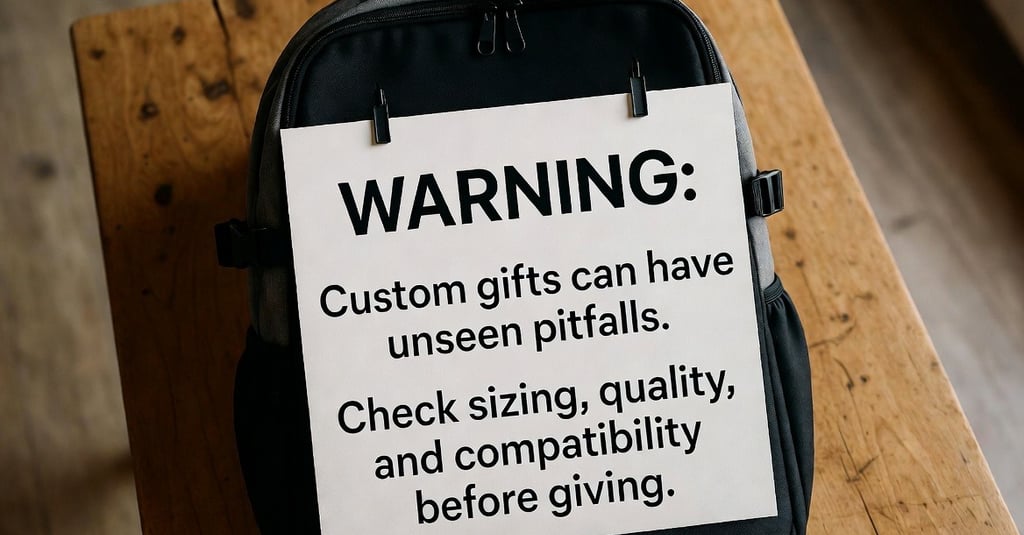

1. First Thing First: Know Your Audience & Use Case
This is the very first step and also the one people most often get wrong! The first time I handled this, I didn’t clarify the purpose and randomly chose a large outdoor-style backpack. It ended up being for a trade show, and attendees found it heavy and inconvenient to carry—leaving us with a lot of leftovers.
Here’s the gist:
Event giveaways: go for small, lightweight backpacks that can hold brochures or small gifts. No need for complicated features.
Employee gifts or annual bonuses: pick something durable with functional compartments, like a commuter-style backpack. It should look premium and be useful in daily life.
Trade shows or promotions: the focus is on branding. Design should be eye-catching and easy to carry so attendees can comfortably tote them around.
Also, consider who will receive them. Students and office workers have very different preferences: students may like bright, trendy designs, while office workers usually prefer minimalist, easy-to-clean styles. Outdoor enthusiasts or athletes care more about materials and durability. Clarifying this upfront makes your material and style choices much easier.
2.Keep Branding Simple: Don’t Overcomplicate
One of the main goals of a gift backpack is to make your brand memorable, but bigger logos and complex designs aren’t always better.
Once, I tried to highlight our brand with a gradient logo using heat transfer. In small-batch production, the colors blurred badly—far from the sample—and we had to redo everything, costing extra time and money.
My advice: choose a clean, simple logo, ideally embroidered, woven, or silicone tags. Avoid complex gradients—they’re prone to errors in small runs.
For colors, if your company has a brand color, make sure to confirm the exact color code with the manufacturer or provide a physical sample. For small-batch orders, getting close to the main color is usually enough—no need to stress over perfection.
As for style, keep it simple: backpacks, tote bags, or crossbody bags are enough. The more features you add, the higher the cost and the more likely production issues will occur.
3.Materials & Hardware: Invest Wisely
The feel and durability of a backpack largely come down to materials and hardware. Don’t skimp, but also don’t overspend unnecessarily.
Fabric options:
Polyester: best value, many colors, durable—good for tight budgets.
Nylon: lighter than polyester, still durable, slightly more expensive.
Oxford cloth: thickest and most premium-looking—ideal for high-end gifts.
Hardware:
Zippers and buckles are critical. I once used an unknown brand zipper that broke after a few uses. Now I always choose SBS or YKK—slightly more expensive but much more reliable.
Plastic buckles are enough for gift backpacks—economical and practical; metal isn’t necessary.
Lining: adds to the feel and quality if budget allows.
Nowadays, using recycled polyester or biodegradable materials is a great way to be eco-friendly and enhance your company’s green image—double win!
4.Samples & Production: Never Skip
Many people try to save time and order directly after a quick chat with the manufacturer—big mistake! A friend of mine did that and ended up with a batch that looked nothing like the design—huge losses.
The right process:
Confirm all details with the factory: quantity, lead time, packaging, etc., in the contract.
Request a sample or a color design mock-up before mass production. Check logo placement, clarity, colors, zipper direction, stitching, and other details carefully.
Inspect during production: randomly check a few batches, focusing on logo, zippers, straps, and seams. Gift backpacks have low tolerance for errors—issues in large batches waste money and hurt your brand image.
5. Packaging & Shipping: The Finishing Touch
Packaging and logistics often get overlooked, but they directly impact the perceived quality of your gift. I once did a batch of employee backpacks packaged in simple plastic bags—employees felt cheap, and it didn’t reflect the company’s care.
Tips:
Individual packaging: gift bags or small boxes instantly elevate the feel.
Bulk shipping: protect against crushing and deformation so backpacks arrive pristine. For overseas shipping, confirm logistics and customs ahead of time.
Add small extras: branded hang tags, event brochures, or thank-you cards add value at minimal cost.
6. Common Pitfalls & Quick Fixes
Here’s a checklist of the most common issues I’ve encountered and how to avoid them:
ProblemSolutionLogo blurry or fadedAlways confirm a sample; avoid complex gradientsZipper/buckle color mismatchProvide physical samples to unify color and sizeIncorrect backpack sizeGive the manufacturer a detailed size chart for confirmationHigh cost for small batchesSimplify hardware and design; balance cost and appearanceInconsistent quality in bulkRandomly inspect production, focus on zippers, straps, and stitchingDesign changes mid-productionConfirm modification fees upfront; sign written approval
Custom gift backpacks aren’t complicated if you remember one thing: practical design, clear branding, consistent quality, and thoughtful packaging.From defining purpose and audience to choosing materials, production, and shipping, paying attention at every step ensures your gift backpacks are both useful and impressive—showing recipients that your company really cares.
Contact us
(086) 186-656-405-88 020-869828799
Phone:
Email:
sales@backpackmanufacturer.com
Premium Custom Backpack Manufacturer | OEM/ODM Factory
Factory Address:
Factory-1: Golden Lion Avenue West Road, No. 15, 13-14 (4-6 floors),Shiling Town, Huadu District, Guangzhou
Factory-2: No.17, Lane 4, Dakengshu, Qianjin Village, Shiling, Huadu, Guangzhou, China
WhatsApp/Wechat
(+86) 186-656-405-88
Copyright © 2008-2026 Guangzhou BM(aulandi) Bags Co.,LTD. All rights reserved
Quick Link:
FREE SAMPLES:
Industries We Serve